Keep Your Trees Healthy and Structurally Sound
Precision tree pruning services that improve safety and growth throughout the Hemlock, New York Area
Your trees grow differently depending on where they stand on your property in Hemlock, Livonia, Avon or a surrounding area, and not all growth benefits the tree. Dead branches, crossing limbs, and dense canopy sections can restrict airflow, invite disease, and create points of failure during storms. Britton Tree LLC provides precision pruning to remove problem growth while supporting the long-term health and structure of your trees.
Pruning is not the same as trimming for clearance. It focuses on removing dead, diseased, or poorly attached branches before they become hazards. This work also opens up the canopy to improve sunlight penetration and air circulation, which reduces the likelihood of fungal infections and weak limb development. Seasonal timing matters in the climate conditions common across this part of New York, and scheduling pruning during dormancy or early spring often yields the best results.
If your trees have not been pruned recently, contact Britton Tree LLC to discuss which trees would benefit and when to schedule the work in Hemlock or a neighboring community.
What Pruning Changes in the Canopy
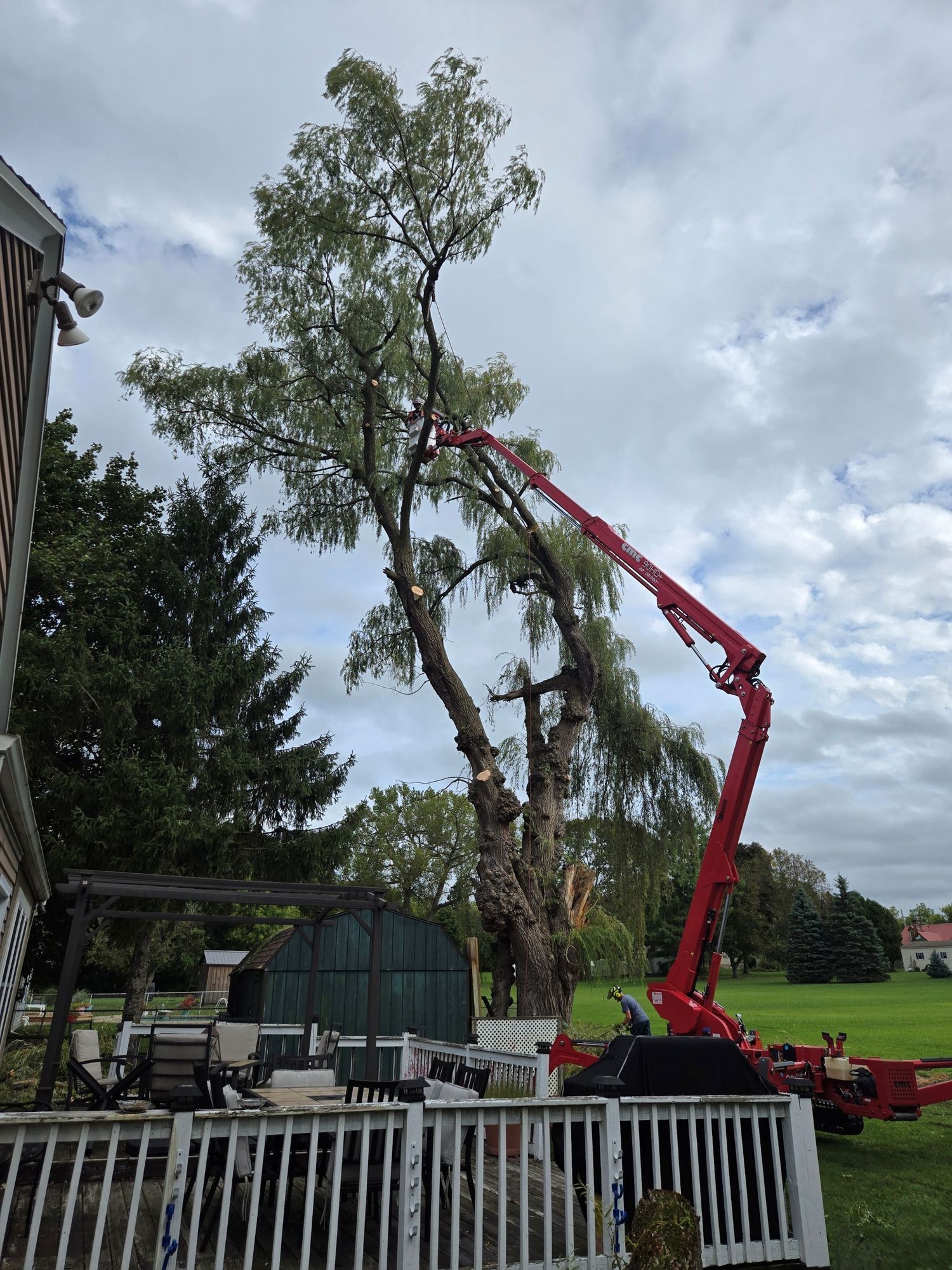
Each pruning job begins with identifying which branches compromise the tree's structure or health in Hemlock or a surrounding area. Cuts are made at the branch collar to promote proper healing, and only the limbs that present risk or interfere with healthy growth are removed. Equipment includes pole saws, hand pruners, and climbing gear for taller canopy work.
After pruning, you will notice improved light distribution beneath the tree and a more balanced canopy shape. Britton Tree LLC focuses on preserving the natural form of the tree while reducing the chance of limb breakage and disease spread. The ground is cleared of all cut material once the work is finished.
Pruning is most effective when performed on a recurring schedule rather than waiting for visible damage. It does not include fertilization, pest treatment, or root work. If a tree shows signs of disease or insect activity, those conditions should be addressed separately before or after pruning takes place.
Knowing when and why to prune depends on the species, age, and condition of your trees, all of which vary widely on properties throughout Hemlock.
Common Pruning Concerns Are Easy to Address
What types of branches should be pruned?
Dead branches, limbs that cross or rub against each other, and any growth that blocks sunlight or creates weak attachment points are typically removed during pruning.
How often should I have my trees pruned?
Most mature trees benefit from pruning every two to four years, though younger or faster-growing trees may need attention more frequently depending on growth patterns in Hemlock.
When is the best time to prune trees?
Pruning is often scheduled during late winter or early spring when trees are dormant, though certain species and conditions may require different timing based on local climate.
Why does pruning improve tree health?
Removing dead and diseased wood prevents decay from spreading, while opening the canopy allows more air and light to reach interior branches, reducing the risk of fungal growth.
What happens to the branches after they are cut?
All pruned material is removed from the site and hauled away, leaving your property clean and your trees ready to grow with improved structure.
If your trees show dense canopy growth, dead limbs, or crossing branches, reach out to schedule a pruning evaluation in Hemlock and improve both safety and long-term health.